
SSD DISK
( number of products: 3488 )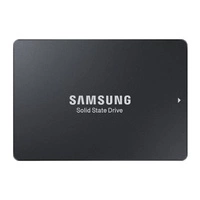

SSD disk Samsung PM883 3.84TB 2.5'' SATA 6Gb/s TLC 3D-NAND | MZ7LH3T8HMLT

SSD disk Samsung PM983 960GB U.2 NVMe TLC 3D-NAND | MZQLB960HAJR

SSD disk Crucial BX500 240GB 2.5'' SATA 6Gb/s TLC 3D-NAND | CT240BX500SSD1

SSD disk HP Mixed Use 1.6TB HHHL NVMe PCIe 3.0 x8 877825-B21-RFB 877825-B21 | REFURBISHED

SSD disk HP Mixed Use 6.4TB HHHL NVMe PCIe 3.0 x8 877829-B21-RFB 877829-B21 | REFURBISHED

SSD disk HP Read Intensive 480GB 3.5'' SATA 6Gb/s 877748-B21-RFB 877748-B21 | 878847-001 | 878847-001-RFB | REFURBISHED
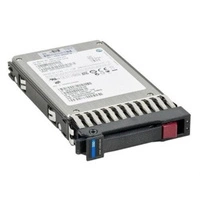
SSD disk HP Mixed Use 1.92TB 3.5'' SATA 6Gb/s 877790-B21-RFB 877790-B21 | 879020-001 | 879020-001-RFB | REFURBISHED
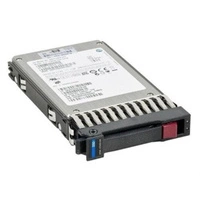
SSD disk HP Read Intensive 480GB 3.5'' SATA 6Gb/s P04499-B21-RFB P04499-B21 | REFURBISHED
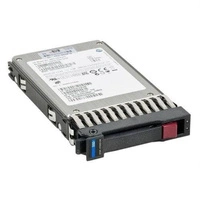
SSD disk HP Read Intensive 480GB 3.5'' SATA 6Gb/s P09687-B21-RFB P09687-B21 | P09845-001 | P09845-001-RFB | REFURBISHED
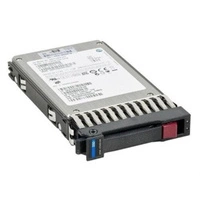
SSD disk HP Read Intensive 960GB 3.5'' SATA 6Gb/s P09691-B21-RFB P09691-B21 | REFURBISHED
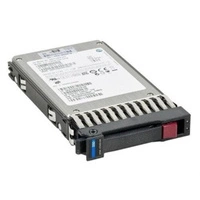
SSD disk HP Mixed Use 1.92TB 3.5'' SATA 6Gb/s P09724-B21-RFB P09724-B21 | REFURBISHED
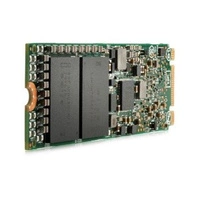
SSD disk HP Mixed Use 960GB M.2 2280 SATA 6Gb/s 875492-B21-RFB 875492-B21 | 875852-001 | 875852-001-RFB | REFURBISHED

SSD disk HP Read Intensive 240GB 2.5'' SATA 6Gb/s 868814-B21-RFB 868814-B21 | REFURBISHED
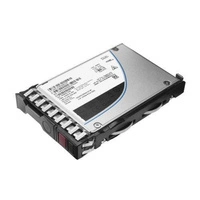
SSD disk HP Read Intensive 480GB 2.5'' SATA 6Gb/s 868818-B21-RFB 868818-B21 | REFURBISHED

SSD disk HP Read Intensive 960GB 2.5'' SATA 6Gb/s 868822-B21-RFB 868822-B21 | 868928-001 | 868928-001-RFB | REFURBISHED

SSD disk HP Read Intensive 1.92TB 2.5'' SATA 6Gb/s 868826-B21-RFB 868826-B21 | 868930-001 | 868930-001-RFB | REFURBISHED

SSD disk HP Mixed Use 480GB 2.5'' SATA 6Gb/s 872344-B21-RFB 872344-B21 | 872518-001 | 872518-001-RFB | REFURBISHED

SSD disk HP Mixed Use 1.92TB 2.5'' SATA 6Gb/s 872352-B21-RFB 872352-B21 | 872522-001 | 872522-001-RFB | REFURBISHED

SSD disk HP Mixed Use 400GB 2.5'' SAS 12Gb/s 872374-B21-RFB 872374-B21 | 872505-001 | 872505-001-RFB | REFURBISHED

SSD disk HP Mixed Use 800GB 2.5'' SAS 12Gb/s 872376-B21-RFB 872376-B21 | 872506-001 | 872506-001-RFB | REFURBISHED

SSD disk HP Mixed Use 1.6TB 2.5'' SAS 12Gb/s 872382-B21-RFB 872382-B21 | 872509-001 | 872509-001-RFB | REFURBISHED

SSD disk HP Write Intensive 400GB 2.5'' SAS 12Gb/s 873351-B21-RFB 873351-B21 | REFURBISHED
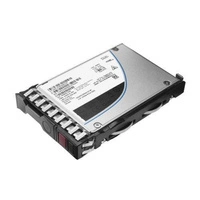
SSD disk HP Write Intensive 800GB 2.5'' SAS 12Gb/s 873355-B21-RFB 873355-B21 | 873564-001 | 873564-001-RFB | REFURBISHED

SSD disk HP Mixed Use 400GB 2.5'' SAS 12Gb/s 873359-B21-RFB 873359-B21 | 872505-001 | 872505-001-RFB | REFURBISHED

SSD disk HP Mixed Use 800GB 2.5'' SAS 12Gb/s 873363-B21-RFB 873363-B21 | REFURBISHED

SSD disk HP Mixed Use 1.6TB 2.5'' SAS 12Gb/s 873365-B21-RFB 873365-B21 | REFURBISHED

SSD disk HP Mixed Use 960GB 2.5'' SATA 6Gb/s 875474-B21-RFB 875474-B21 | 875865-001 | 875865-001-RFB | REFURBISHED
SSD - what is it?
SSD, stands for solid-state drive. At first, the ssd drive was called by some as ssd hard drive, but it has little in common with the classic HDD solution. Its greatest success is mainly that they are extremely fast, which convinces people to switch from hdd to ssd. The ssd internal drive makes computers turn on much faster, and using websites is certainly much more comfortable.
SSD vs HDD drive, where does the difference come from?
First of all, from their construction, because here we have no moving parts, but everything works on the principle of writing flash memory. These solutions were built in different technologies: slc ssd, mlc ssd, tlc ssd (3d nand drives are a development of this technology). Nowadays, mainly tlc ssd solution (3 bits per cell) is used, but QLC SSDs (4 bits per cell) are being developed.
SSD selection
What kind of SSD? Which SSD? Recommended SSDs? These are the three most popular questions customers come to us with. There is no clear answer to these questions without checking the customer's needs. Just as often we have a question about compatibility, as customers are also looking for drives that are compatible with windows 10 and windows server, but here it is much simpler, because SSD drive is compatible with any operating system.
Types of SSDs by interface
SATA III SSD – It is the most popular and also the cheapest solution available on the market. Its development capabilities are limited and it is impossible to create more efficient SSDs based on this interface. SSD SATA 3 is backward compatible with SSD SATA 2. The drives are designed mainly for read intesive operation.
SAS SSD – a server solution designed for demanding customers and businesses. SAS drives have the ability to send/receive data simultaneously making them good for mix used and write intensive tasks. These are the best ssd drives for mixed applications where high IOPS values for read and write are needed.
PCI express SSD – development of SSDs was the emergence of PCIe SSDs, which were designed to demonstrate the full capability of solid-state drives. The PCIe SSD was connected bypassing the controller to the PCIe connector, so they could try to compete with RAM bandwidth. A popular solution is to use M2 PCIe adapters to connect M.2 drives to the PCIe connector.
NVME SSD - NVME (Non-Volatile Memory Express) drives are a development of the PCIe drive concept. NVME SSDs are currently the most efficient solution offering continuous writing or reading, so it can be assumed that it is the fastest SSD.
The most popular SSD formats
SSD 2.5 – or the most popular 2.5-inch drives, otherwise known as SFF, or small form factor. This format, mainly works on the basis of SATA and SAS solutions.
SSD M2 - m2 drives can come in different sizes (length given in mm): m2 ssd 2242 (42mm), ssd m2 2280 (80mm), ssd m2 22110 (110mm). The most popular solution today is the m2 nvme drive.
SSD HHHL (albo HH-HL z ang.: half height half length) SSD in the form of a card that plugs directly into a PCIe connector.
SSD U.2 (SFF-8639) – 2.5" drives that rely on NVMe intrface.
SSD selection at ESUS IT
In the offer of our ESUS IT store you will find a wide selection of modern SSDs, including mainly server SSDs. Recommended SSDs are:
SSDs by capacity
In gigabytes (GB)
Capacities from 120GB to 960GB
In terabytes (TB)
Capacities from 1TB to 8TB
Application of SSDs
Currently, SSDs are most commonly used in two types of devices.
Servers - SSD drives are also used in devices that are forced to process many queries simultaneously, such as servers that have extensive databases. The price of the product is based on endurance, which is affected by DWPD (Data write per day) or TBW (Terabyte written) or PBW (Petabyte written).
Laptop and desktop computers - modern SSD drives are largely used in laptops and ultrabooks, where speed of resilience and power consumption are crucial. SSDs for laptops should be selected based on the interface and form factor.
You can also find disks by the way we operate:
- Very Read Intensive (VRI)
- Read Intensive (RI)
- Mix Used (MU)
- Write Intensive (WI)
For more information about the SSDs on offer, please feel free to contact us by email or phone. We will be happy to answer all your questions and help you choose the best SSD that will meet your needs and expectations. At the same time, we would like to remind you that we also have RAM for servers, desktops and RAM for laptops on permanent sale.
We invite you to shop!


