
PROCESSOR AMD EPYC
( number of products: 210 )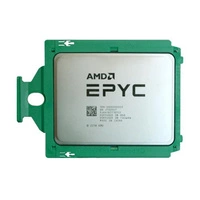

CPU AMD EPYC 7443P (128MB Cache, 24x 2.85GHz) 100-000000342

CPU AMD EPYC 9754 (256MB, 128x 3.1GHz) 100-000001234

CPU AMD EPYC 9734 (256MB, 112x 3GHz) 100-000001235

CPU AMD EPYC 9454 (256MB, 48x 3.8GHz) 100-000000478


AMD Processor EPYC 7742 (256MB Cache, 64x 2.25GHz) 100-000000053

AMD Processor EPYC 7742 (256MB Cache, 64x 2.25GHz) 100-100000053WOF

AMD Processor EPYC 7702 (256MB Cache, 64x 2.00GHz) 100-000000038

AMD Processor EPYC 7702 (256MB Cache, 64x 2.00GHz) 100-100000038WOF

AMD Processor EPYC 7702P (256MB Cache, 64x 2.00GHz) 100-000000047

AMD Processor EPYC 7702P (256MB Cache, 64x 2.00GHz) 100-100000047WOF

AMD Processor EPYC 7642 (256MB Cache, 48x 2.30GHz) 100-000000074
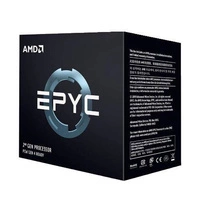
AMD Processor EPYC 7642 (256MB Cache, 48x 2.30GHz) 100-100000074WOF

AMD Processor EPYC 7552 (192MB Cache, 48x 2.20GHz) 100-000000076

AMD Processor EPYC 7552 (192MB Cache, 48x 2.20GHz) 100-100000076WOF

AMD Processor EPYC 7542 (128MB Cache, 32x 2.90GHz) 100-000000075

AMD Processor EPYC 7542 (128MB Cache, 32x 2.90GHz) 100-100000075WOF

AMD Processor EPYC 7502 (128MB Cache, 32x 2.50GHz) 100-000000054

AMD Processor EPYC 7502 (128MB Cache, 32x 2.50GHz) 100-100000054WOF

AMD Processor EPYC 7502P (128MB Cache, 32x 2.50GHz) 100-000000045

AMD Processor EPYC 7502P (128MB Cache, 32x 2.50GHz) 100-100000045WOF

AMD Processor EPYC 7452 (128MB Cache, 32x 2.35GHz) 100-000000057
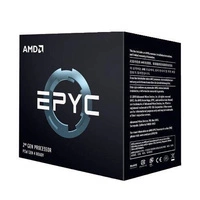
AMD Processor EPYC 7452 (128MB Cache, 32x 2.35GHz) 100-100000057WOF

AMD Processor EPYC 7402 (128MB Cache, 24x 2.80GHz) 100-000000046

AMD Processor EPYC 7402 (128MB Cache, 24x 2.80GHz) 100-100000046WOF

AMD Processor EPYC 7402P (128MB Cache, 24x 2.80GHz) 100-000000048

AMD Processor EPYC 7402P (128MB Cache, 24x 2.80GHz) 100-100000048WOF

AMD Processor EPYC 7352 (128MB Cache, 24x 2.30GHz) 100-000000077
AMD EPYC - High Performance Server Processors
Server processors work non-stop and handle huge amounts of data, and as a result, their design must meet greater demands than those of typical personal computers. AMD has been producing server processors that compete with Intel Xeon proposals for years. The Epyc processor line is characterised by high performance while being economical in terms of power consumption. Although server processors run continuously for several years, their energy consumption varies depending on whether they are in standby mode or processing data.
AMD EPYC 2nd generation are the latest server processors from AMD that allow for multi-threading, increasing the ability to manage data under load. At the same time, they feature a modern architecture with doubled core density, resulting in twice the performance over operations, compared to previous generation processors.
AMD EPYC server processors - what's new?
AMD EPYC server processors in the new release guarantee much better data security, based on technologies that allow encryption of individual virtual machines. Root of trust checks the boot software BIOS. Additionally, encrypted registry state, secure input/output interface and proactive memory encryption make 2nd generation AMD EPYC processors the best solution for modern data-intensive servers.
AMD EPYC for server applications provide the speed and performance to suit any large business that relies on the storage and consumption of large amounts of computing data. In addition, the new line of AMD EPYC processors features a hybrid architecture based on a multi-chip structure that separates the processor cores from the I/O interface bones.
AMD EPYC - highlights
In our offer you will find AMD processors from the EPYC series dedicated to server solutions and data centres. Processors depending on the model have from 8 to 64 cores. The processors in this series can operate up to 128 threads, which significantly increases the efficiency of the entire processor. When choosing a server processor, pay attention to its performance and core The number of supported threads is also an important parameter - it affects the flexibility of data processing.
Find out how much power a particular processor consumes so that you can choose the right power supply to keep the server running at all times. Also important will be the TDP parameter, which tells you how much heat energy the processor emits. With this information, you can determine what kind of heat sink you will need to keep the entire server running properly.



